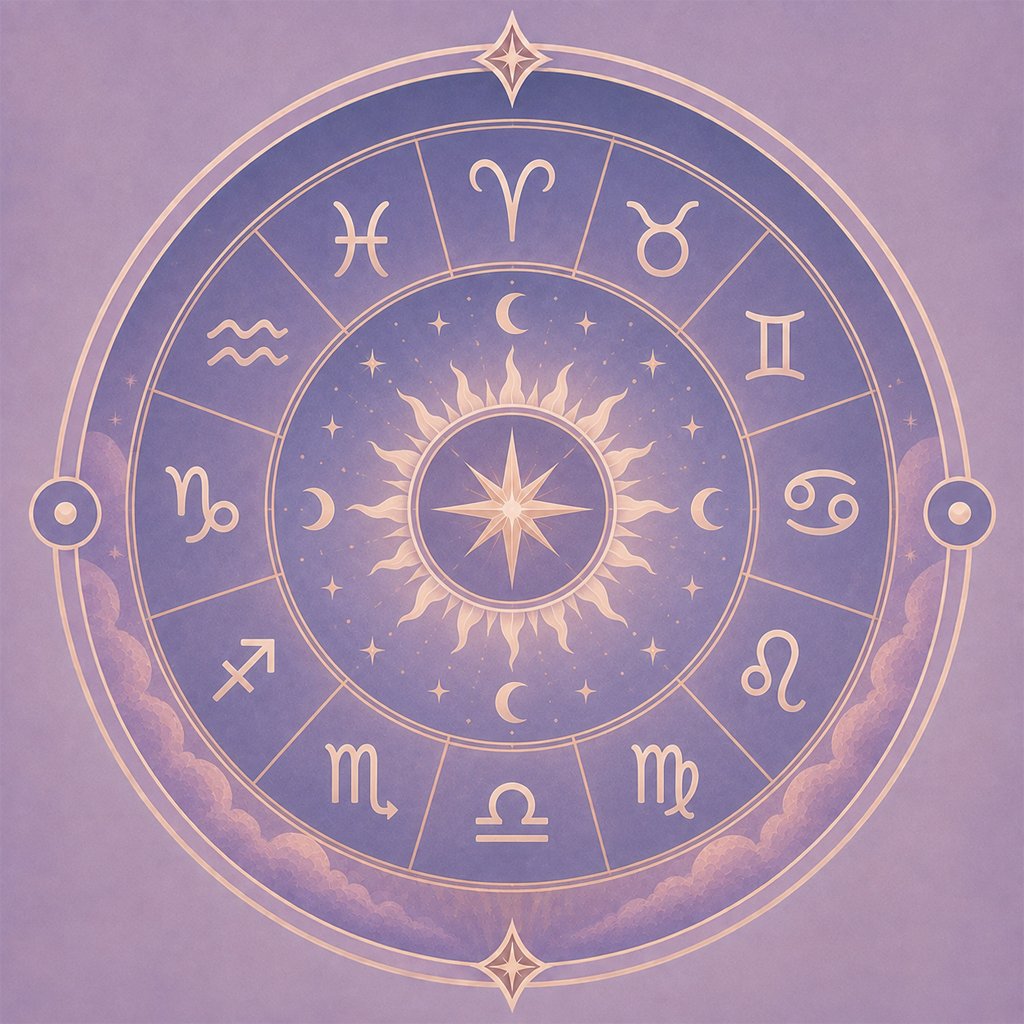
Celestial Almanac
The machinery underneath every reading: four elements, three modalities, ten planets and twelve houses, each set out at length.
Start With Your Sign
Every sign combines an element, a modality and a ruling planet. Yours is a good place to begin.
What The Almanac Covers
Astrology is built from four moving parts, and this section takes each in turn. The signs describe styles, the planets describe functions, the houses describe departments of life, and the elements and modalities sort the twelve signs into groups that behave alike.
Learn those four and a chart stops being a wall of symbols. Every reading anybody produces is some combination of them, and most of the disagreement between astrologers is about weighting rather than about what the parts mean.
None of it requires belief to follow. The system is internally consistent and has been developed over two thousand years, and it can be read as a symbolic language whatever one concludes about it.
Where To Start
The elements are the easiest entry point, because they sort twelve signs into four recognisable temperaments and the descriptions are immediately testable against people you know.
Modalities come next and are less intuitive, but they explain why two signs of the same element behave so differently. Taurus and Virgo are both earth; one holds and one refines, and the modality is the reason.
After that, the planets. That is where a chart stops being a sun sign and starts describing an individual, because ten functions distributed across twelve signs produces something specific.
The Part That Needs A Birth Time
Signs and planets follow from a birth date. Houses do not — they depend on the exact hour and the birthplace, because the whole framework rotates once a day.
This is the single biggest dividing line in what a reading can honestly tell you. Without a time, planetary signs are reliable and everything about houses, the ascendant and the midheaven is guesswork.
Our Star Map collects all three and computes the full picture. Where the hour is genuinely unavailable, it says which parts of the reading are affected rather than filling them in silently.
Two Zodiacs
Western astrology uses the tropical zodiac, which anchors zero degrees Aries to the March equinox. Vedic astrology uses the sidereal zodiac, anchored to the constellations themselves.
The Earth's axis wobbles over a twenty-six-thousand-year cycle, so the two have drifted about twenty-four degrees apart. A tropical Leo is frequently a sidereal Cancer.
Neither is in error. They measure from different reference points and each is internally consistent. Everything in this almanac uses the tropical zodiac, which is what almost all Western material means by a sign.
What Astrology Does Not Claim
Nothing here predicts events. The tradition describes dispositions, tendencies and symbolic relationships, and the reputable end of it has been saying so for a long time.
It is also not a science, does not cause anything, and offers no basis for decisions about health, money or law. Where a reading appears to bear on those, it has left what the tradition supports.
Read as a symbolic system for thinking about temperament, it is old, coherent and occasionally illuminating. Read as a forecast, it is neither reliable nor what its own better practitioners claim for it.