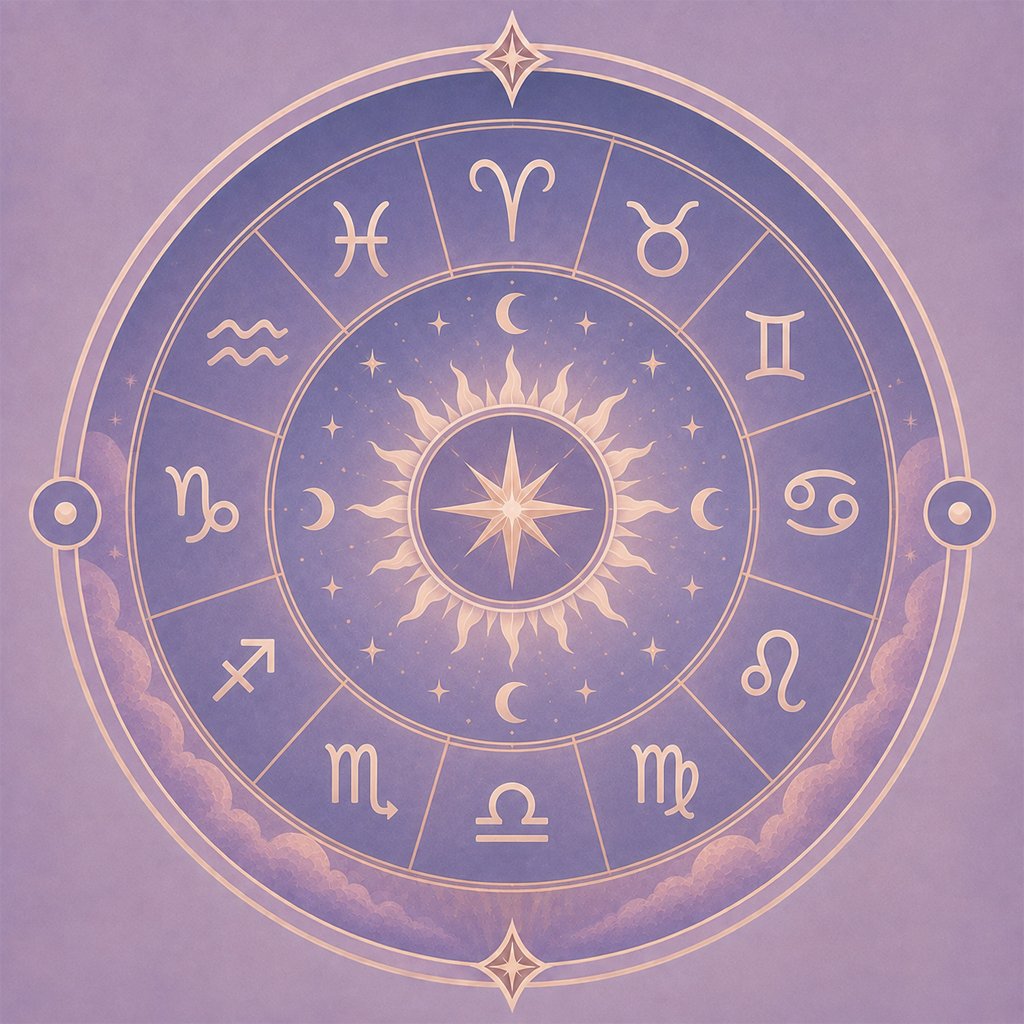
The astrological year has a small number of recurring events: planets turning retrograde and direct, the Sun's ingress into each new sign, eclipse seasons, and the two solstices and equinoxes.
All of them are astronomical facts with exact dates. Where the interpretation is a matter of tradition, the timing is not — these come from ephemeris data and are simply where the bodies are.
That distinction is worth holding throughout. The dates are accurate; what anybody makes of them is a separate question.
Retrograde periods dominate any astrological calendar, so it is worth being clear what is being marked. A retrograde is an optical event: from where we stand, a planet traces a loop backwards against the fixed stars for a stretch of weeks before resuming. The planet itself never changes direction — the appearance arises from two bodies rounding the Sun at different speeds.
How often it happens varies enormously by body, which is why the calendar looks uneven. Mercury turns three or four times annually for around three weeks; Venus manages it roughly every eighteen months; the outer planets spend a substantial share of every year retrograde, so common that marking each one would leave the calendar permanently shaded.
The tradition reads these stretches as a turn toward review over initiation, which is why the dates get noted at all. Whether that carries any weight is a separate question from whether the dates are correct.
An ingress is a body entering a new sign. The Sun's twelve ingresses structure the astrological year, and four of them coincide with the solstices and equinoxes.
The Sun entering Aries is the spring equinox and the traditional start of the astrological year, which is why zero degrees Aries is the reference point the whole tropical zodiac is measured from.
Ingresses of the slower planets are the ones practitioners treat as significant, because Saturn or Pluto changing sign happens rarely enough to mark an era rather than a month.
Eclipses arrive in seasons roughly every six months, when the new and full moons fall close to the points where the Moon's orbit crosses the Earth's. Each season produces two or three.
Solar eclipses occur at new moons and lunar eclipses at full moons. Nothing about the phase itself changes; the alignment is simply tight enough for a shadow to fall.
Traditional astrology treats eclipses as among the most significant events in the calendar. Modern practice varies considerably in how much weight to give them, and it is one of the more open disagreements in the field.
The honest use is as a rhythm. Knowing that Mercury turns retrograde next week is a reasonable prompt to reread contracts, in the same way any three-week window is a reasonable time to reread contracts.
The dishonest use is as a forecast. Nothing on this calendar predicts events, and no planetary period causes anything to happen to anybody.
Where a reading of these dates appears to bear on health, money or a decision that matters, it has gone well beyond what the tradition supports and should be set aside.