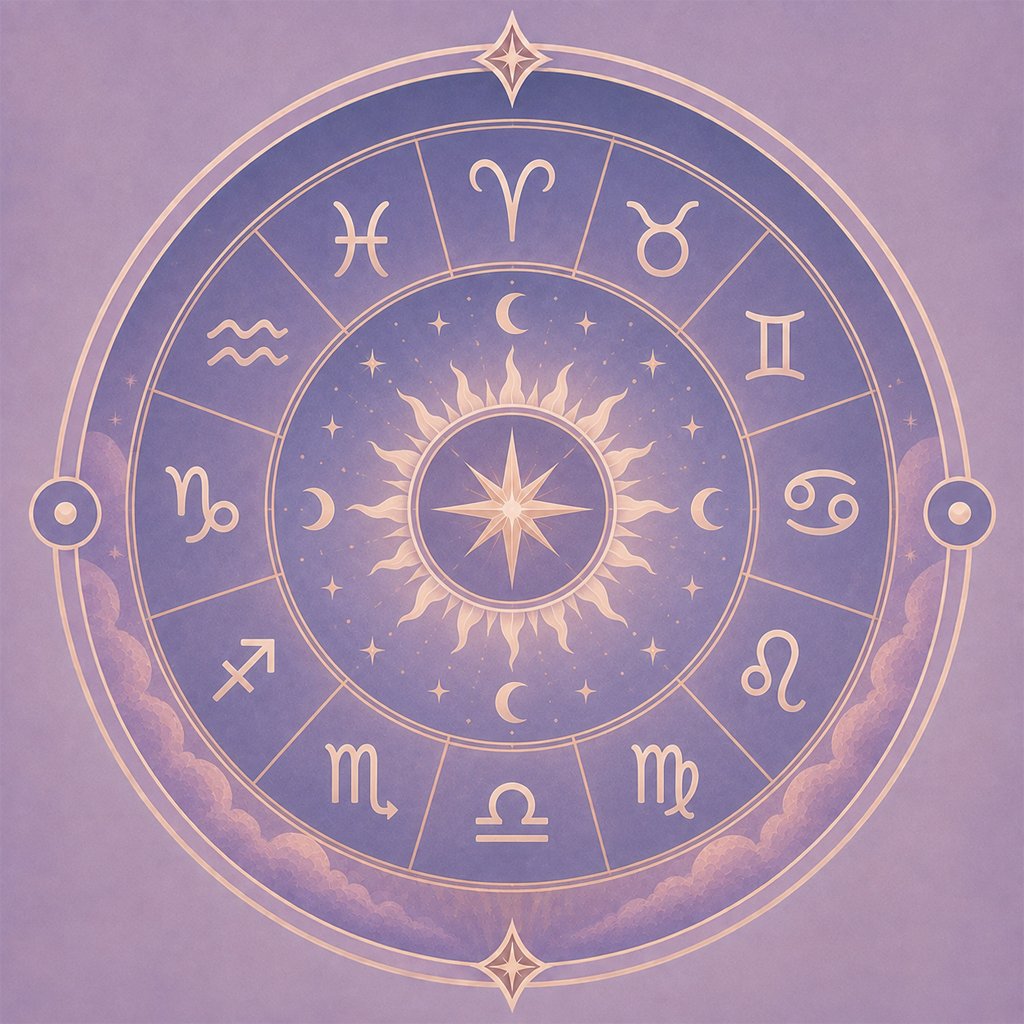
The Three Modalities
Cardinal, fixed and mutable — whether a sign starts, sustains or adapts.
The Second Sort
If the elements describe what a sign is made of, the modalities describe when it arrives. Every sign belongs to one of three — cardinal, fixed or mutable — and the assignment follows the seasons rather than anything about the sign's character.
Cardinal signs open a season. Aries begins spring, Cancer summer, Libra autumn, Capricorn winter, and all four carry the quality of a threshold being crossed. Fixed signs sit in the middle of a season, where the weather has settled and the job is to hold it. Mutable signs close one and hand over to the next, which is why they are the adaptable ones.
Cross the two schemes and every position is unique. Four elements times three modalities gives twelve, and each sign is the only occupant of its combination — fixed earth is Taurus and nothing else, mutable water is Pisces and nothing else.
Reading The Three
Cardinal is initiation. These signs are comfortable being the one who moves first and they are visibly uncomfortable waiting for somebody else to. What they find harder is the long middle stretch after the starting has been done.
Fixed is persistence. Taurus, Leo, Scorpio and Aquarius hold a position — a project, a loyalty, an opinion — well past the point where others would have let it go. It is the source of their reliability and of the immovability that exhausts everyone around them.
Mutable is adjustment. Gemini, Virgo, Sagittarius and Pisces revise as conditions change, which makes them the easiest to work alongside and the hardest to pin to a position. Their difficulty is that flexibility can slide into having no fixed point at all.
Why Oppositions Share A Modality
Look at any pair of signs directly across the wheel and they always share a modality while belonging to opposing elements. Aries faces Libra: both cardinal, one fire and one air. Taurus faces Scorpio: both fixed, one earth and one water.
This is why an opposition feels the way it does. The two signs are working at the same tempo and pushing in incompatible directions, which produces a genuine stand-off rather than the mutual incomprehension that separates, say, fire from water at random.
It also explains why oppositions are so often described as complementary. Both parties recognise the other's pace immediately; what they disagree about is where that pace should be pointed.
The Squares Are The Interesting Part
Signs sharing a modality but not an element sit ninety degrees apart, which the tradition calls a square and reads as the friction that actually produces movement. Cardinal Aries, Cancer, Libra and Capricorn all want to lead and none of them wants to lead in the same direction.
Fixed squares are the immovable ones. Taurus, Leo, Scorpio and Aquarius each hold their ground for entirely different reasons, and a disagreement between two fixed signs is less an argument than a siege.
Mutable squares scatter instead. Gemini, Virgo, Sagittarius and Pisces adapt in four incompatible directions at once, and the result is not deadlock but dispersal — everybody flexible, nothing decided.
Using Modality In A Real Chart
Count modalities the way you count elements, across the ten bodies and the ascendant. A chart heavy in cardinal describes somebody who keeps starting; heavy fixed describes somebody who keeps going; heavy mutable describes somebody who keeps adjusting.
The combination with element is where it gets specific. Fixed fire and fixed water are both stubborn, but Leo holds a position in public and Scorpio holds one privately, and confusing the two produces a reading that fits neither.
A missing modality is worth as much attention as a missing element. No cardinal placements at all describes somebody who is capable of a great deal once something is underway, and who genuinely struggles to be the person who starts it.