The Four Elements
Fire, earth, air and water — the temperament underneath every sign.
Four Ways Of Meeting The Same Situation
Put four people in front of one problem and you get four different opening moves. One asks what can be done immediately, one asks what it will cost, one asks what it actually is, and one asks who it affects. Those four questions are the elements, and every sign in the zodiac is assigned to whichever one it asks first.
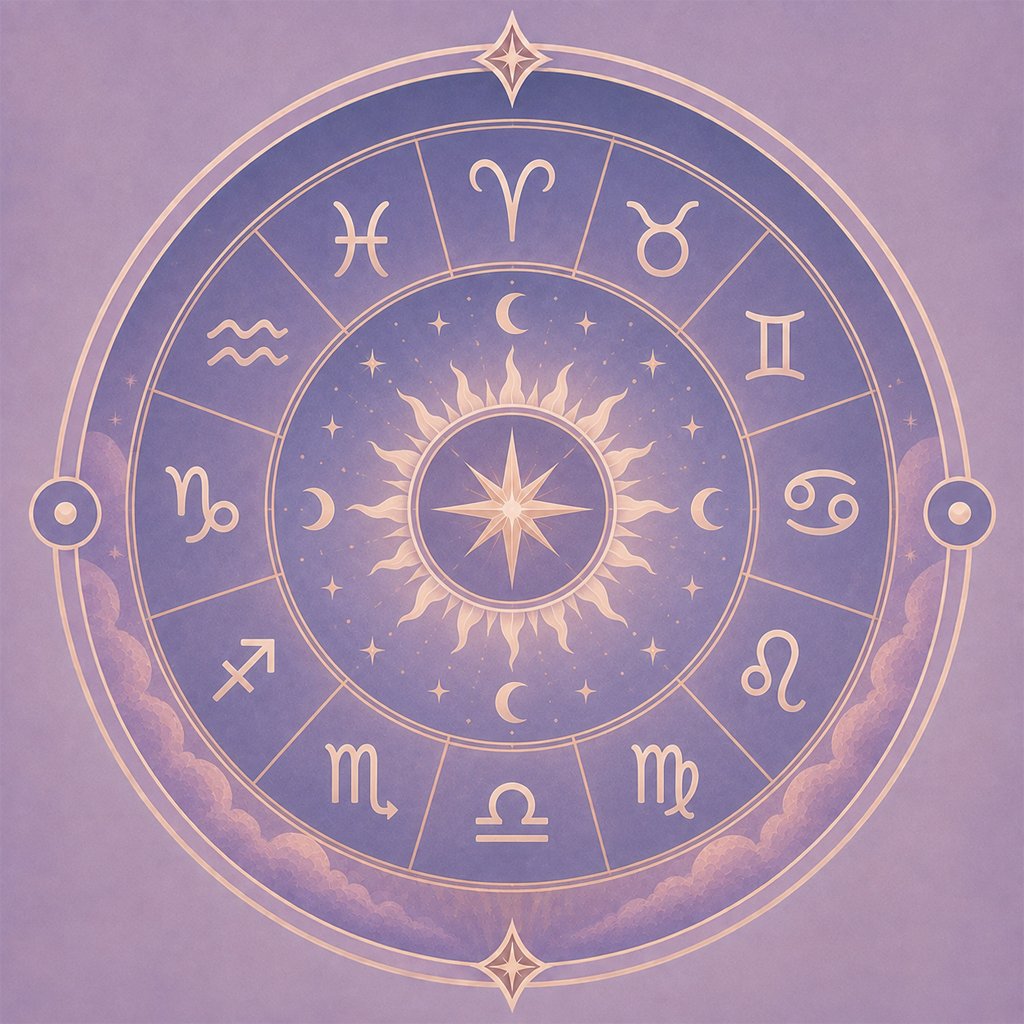
The scheme divides the twelve signs into groups of three. Aries, Leo and Sagittarius are fire; Taurus, Virgo and Capricorn are earth; Gemini, Libra and Aquarius are air; Cancer, Scorpio and Pisces are water. Trace them around the wheel and each element lands on every fourth sign, forming a triangle.
That geometry is the reason two signs of the same element get on so easily. They sit a third of the circle apart, an angle the tradition calls a trine, and it describes the kind of agreement that never needed negotiating in the first place.
Fire And Earth
Fire is the element of impulse. It supplies the willingness to begin before the picture is complete, and it treats hesitation as a bigger risk than error. Aries starts, Leo sustains through presence, and Sagittarius keeps enlarging the frame until the original question looks small.
Earth is the element of consequence. It measures every proposal against what it will cost and who will still be doing the work in six months. Taurus holds, Virgo refines, Capricorn builds a structure meant to outlast the person who built it.
Between them sits the most productive irritation in the zodiac. Fire experiences earth as a brake; earth experiences fire as a hazard. Both readings are locally accurate, which is exactly why the pairing so often produces something neither would have finished alone.
Air And Water
Air is the element of distance. It steps back far enough to see a situation whole, and it needs to name a thing before it can be dealt with. Gemini gathers, Libra weighs one position against another, Aquarius tests the principle underneath and asks whether it survives.
Water is the element of immersion. It takes in the emotional temperature of a room without deciding to, and it knows things well before it can explain how. Cancer protects, Scorpio goes further in than anyone asked, Pisces stops registering the boundary between itself and everyone else.
These two misunderstand each other in a particular, recognisable way. Air responds to distress by analysing it, which water experiences as being handled rather than met. Water responds by feeling alongside, which air experiences as the problem getting larger instead of clearer.
Counting Them In A Chart
The elements become genuinely useful once you stop reading a sun sign and start counting placements. Ten bodies plus the ascendant distribute themselves across four elements, and that distribution is rarely even.
Most charts lean. Three or four placements in one element describe someone with a default mode they reach for automatically, and that default explains far more about how a person handles pressure than any single sign does.
The gaps are more informative still. An element with nothing in it names a faculty that had to be constructed rather than inherited, and people usually recognise the description immediately because they have been working around it their whole lives.
Where The Scheme Came From
The four elements began as an account of physical matter in classical Greek philosophy, and the temperaments attached to them arrived from the medicine of the same period. Fire was choleric, earth melancholic, air sanguine, water phlegmatic.
The physiology behind that was abandoned centuries ago. The four-way sort survived it, which tells you the scheme was never really doing the work its authors claimed — it endured because it is a serviceable way of sorting dispositions, not because bodily humours are real.
It also explains why the old vocabulary misleads. A melancholic earth sign in a medieval text is being called deliberate and slow to shift, not unhappy, and reading the modern meaning back into those sources produces confusion that the sources never contained.
Common Questions
Is one element better than the others? No, and the question usually arrives from reading four descriptions and preferring one. Each element is competent at what the other three find effortful, and every chart carries some of all four.
Can my element change? No. It follows from your sun sign, which is fixed. What changes is how much of each element your whole chart carries, and that is a matter of counting placements rather than of anything shifting.
Why do people say fire and air get on? Because both are oriented outward and neither is slowed by the other. Air supplies the reasoning fire skips and fire supplies the momentum air can theorise away, and the exchange costs neither of them much.
What if I do not recognise myself in my element? Then something else in the chart is probably carrying more weight. A fire sun with four water placements will not read as a fire chart, and the count is the thing to look at rather than the sun alone.