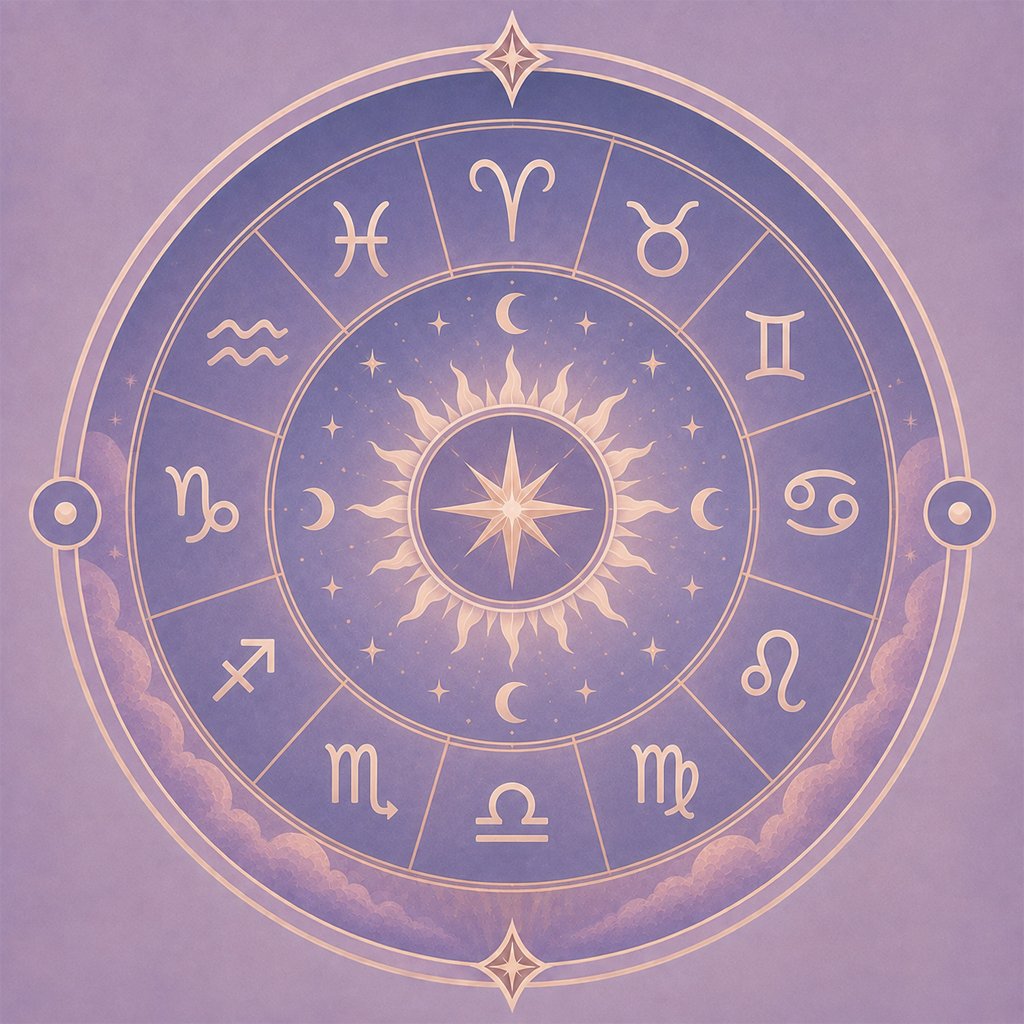
The Twelve Houses
The twelve areas of life a natal chart divides into.
Twelve Departments Of A Life
Signs describe how somebody operates and planets describe which function is operating. The houses answer a third question: where. Each of the twelve covers a department of ordinary life, and a planet's house says which part of a life its function shows up in.
The list runs from the self outward. First is the person themselves, second what they own, third their immediate surroundings, and so on around to the twelfth, which covers what is hidden or set apart.
A planet in a house puts that function to work in that department. Mars in the sixth applies drive to daily work; Mars in the ninth applies it to travel and belief. Same function, entirely different life.
Why The Birth Time Is Not Optional Here
The houses are anchored to the horizon at the moment of birth, and the Earth rotates once a day. That means the entire house framework turns through a full circuit every twenty-four hours.
A four-minute error shifts the cusps by one degree. An hour puts them out by fifteen, which is often enough to move planets between houses and change the reading materially.
Without a birth time, planetary signs remain accurate and the house layer is guesswork. Any reading that offers house placements from a date alone is inventing them.
Angular, Succedent, Cadent
The twelve group into three sets of four by strength. The angular houses — first, fourth, seventh, tenth — sit on the chart's four corners and are the most prominent; a planet there shows up unmistakably in a life.
The succedent houses — second, fifth, eighth, eleventh — follow the angles and carry the quality of consolidation. Planets there work steadily rather than conspicuously.
The cadent houses — third, sixth, ninth, twelfth — precede the angles and are traditionally the weakest by placement, associated with preparation, adjustment and transition rather than with visible effect.
The Six Axes
Houses opposite each other form a pair, and each pair divides a department of life in two. First and seventh split self and other; second and eighth split what is yours and what is shared.
Third and ninth divide near knowledge from far — the local and immediate against the distant and philosophical. Fourth and tenth divide private life from public standing.
Fifth and eleventh divide personal creation from collective belonging, and sixth and twelfth divide the daily and structured from the unstructured and hidden. Reading a house against its opposite gives a fuller picture than reading it alone.
House Systems Disagree
There is no single agreed method for dividing the wheel into twelve. Placidus is the most widely used in Western practice, whole sign is the oldest and is returning to favour, and Koch, Equal and Campanus all have followings.
They agree on the ascendant and usually on the midheaven, and can disagree substantially about everything between. A planet near a cusp may sit in different houses depending on which system was used.
Placidus is also undefined at extreme latitudes, above roughly sixty-six degrees, where charts fall back to equal houses. If two readings of your chart differ, the house system is the first thing to check.
Empty Houses Are Normal
Ten bodies distributed across twelve houses guarantees that at least two are empty in every chart ever drawn. Most charts have four or five.
An empty house is not a blank in somebody's life. It is read through the sign on its cusp and through wherever the ruler of that sign sits, which routes the department to another part of the chart.
What an empty house does indicate is that the department is not one of the chart's headline themes. It is being handled, just not loudly.